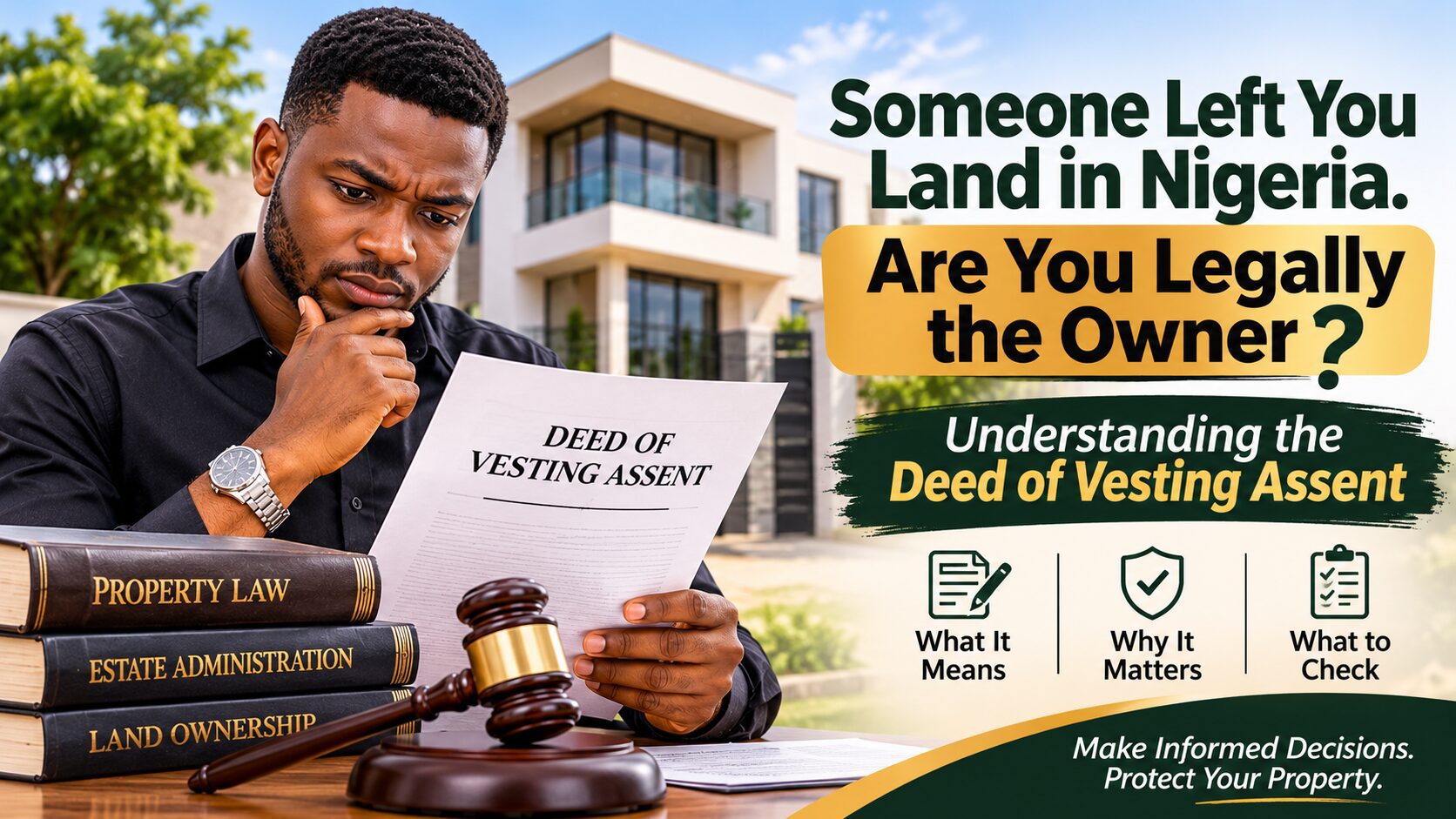
Deed of Vesting Assent in Nigeria: Meaning, Importance and Requirements
Understanding Deed of Vesting Assent is essential for anyone buying or selling inherited property in Nigeria (eg. Family Land)
For instance: Someone dies and Left You Land in Nigeria. Are You Legally the Owner?
Imagine your father owns a plot of land in Abuja. Before his death, he decides to leave that land to you.
After his death, you become the person entitled to inherit the property.
But here is an important question: Can you simply take the land, sell it or transfer it to someone else because your father left it to you?
Not necessarily. You may need to complete certain legal steps to properly transfer the property into your name.
One important document used for this purpose is called a Deed of Vesting Assent.
In this article, we explain what it means, why it matters and what you should know before buying inherited property in Nigeria.
1. What Is a Deed of Vesting Assent?
A Deed of Vesting Assent is a legal document used to transfer a deceased person’s property to the person entitled to inherit it.
Suppose your father owns a house in Lugbe, Abuja. When he dies, he leaves the house to you in his Will.
The people legally responsible for managing his property must follow the proper legal process before transferring the property to you.
Once the necessary requirements are met, they can sign a Deed of Assent or appropriate vesting document to transfer his interest in the property to you.
This document helps show how you became the new owner.
2. Why Is a Deed of Vesting Assent Important?
This document is important for several reasons:
- Proof of transfer: It provides evidence that the deceased person’s property has been transferred to the rightful beneficiary.
- Selling the property: It helps establish your legal interest when you want to sell the inherited property.
- Avoiding disputes: It helps reduce confusion about who is entitled to the property.
- Property documentation: It forms part of the documents used to establish the property’s ownership history.
Remember, having this document does not automatically mean the original property title was genuine. That must also be checked.
3. What Happens When Someone Dies Without a Will?
There are two common situations.
A. When the person leaves a Will
A Will is a document that explains how someone wants their property shared after death.
For example, a father may write in his Will that his house should go to his first son.
The people appointed to carry out his instructions are called executors.
They usually need to obtain a Grant of Probate, which gives them legal authority to manage the estate.
They can then follow the required process to transfer the property to the beneficiary.
B. When the person dies without a Will
Sometimes, someone dies without writing a Will. This is called dying intestate.
In this situation, the appropriate family members or other qualified persons may apply for Letters of Administration.
This document gives them legal authority to manage and distribute the deceased person’s property according to the applicable law.
4. What Is the Difference Between Deed of Vesting Assent and Deed of Assignment?
These two documents are related to property ownership, but they are used for different purposes.
Deed of Vesting Assent: Used to transfer a deceased person’s property interest to someone entitled to inherit it.
Deed of Assignment: Commonly used when someone transfers their interest in a property to another person, usually through a sale.
For example:
If your father dies and leaves you his land, the inheritance process may involve a Deed of Assent.
If you later decide to sell that land to another person, the sale may be documented with a Deed of Assignment.
5. Can You Buy Inherited Land Without Checking the Documents?
Absolutely not. This is where many property buyers make mistakes.
Imagine someone offers to sell you land in Kuje, Abuja. The seller tells you that he inherited the land from his late father.
He shows you a document bearing his father’s name and asks you to make payment.
Should you pay immediately?
NO.
Before paying, investigate the following:
- Original title: Was the land legally owned by the deceased person?
- Will: Was there a Will showing who should inherit the property, if applicable?
- Probate or Letters of Administration: Were the people managing the estate legally authorized?
- Deed of Assent: Was the property properly transferred to the beneficiary, where required?
- Land verification: Do the relevant land records support the seller’s ownership claim?
- Family disputes: Are there other family members claiming ownership of the property?
For land in Abuja, engage a qualified property lawyer to check the documents and carry out the necessary searches with the relevant FCT authorities.
Never pay for inherited land simply because the seller says it belongs to him.
6. Frequently Asked Questions
What does Deed of Vesting Assent mean?
It is a legal document used to transfer a deceased person’s property interest to the person entitled to inherit it.
Is Deed of Vesting Assent the same as Deed of Assignment?
No. A Deed of Assent relates to inheritance, while a Deed of Assignment commonly relates to the transfer of property through a sale or another transaction.
Can I sell land I inherited from my father?
Yes, provided you have the legal right to sell it and have complied with the necessary estate administration and property transfer requirements.
Does having a Deed of Vesting Assent mean the land is safe to buy?
Not automatically. You must also verify the original owner’s title and check the property’s ownership history.
Who prepares a Deed of Vesting Assent?
A qualified lawyer experienced in property law and estate administration should prepare or review the document.
Conclusion
Inheriting land or a house from your parents or relatives does not mean you should ignore the legal process of transferring ownership.
A Deed of Vesting Assent helps document the transfer of a deceased person’s property interest to the rightful beneficiary.
Whether you are inheriting property or buying land from someone who claims to have inherited it, always check the documents before making any payment.
Remember: Don’t just ask who is selling the land. Ask how the seller became its owner.